TLDR
·
1 week ago
Different AI models use different tokenizers, so the same text consumes different numbers of tokens across models—for example, this article required 160 tokens in GPT-4o but 200 in GPT-4, making per-token price comparisons unreliable. DeepSeek V4 Pro costs $0.04–$0.05 per benchmark task despite appearing cheaper per token, while Claude Sonnet 5 performs worse than Claude Opus 4.8 yet costs more per completed task due to lower token efficiency. Companies selecting AI models based solely on per-token pricing will make poor decisions and end up paying more for worse performance, since actual token efficiency and output quality vary significantly across models.
TLDR
·
1 week ago
Tech CEOs have reversed their previous predictions that AI would eliminate large numbers of jobs, now arguing instead that AI will increase worker productivity while preserving employment. The shift lacks concrete evidence, with no specific productivity metrics or job retention numbers provided to support the new framing. This change could affect regulatory conversations around AI oversight, since fears of mass joblessness have driven calls for stricter AI governance.
TLDR
·
1 week ago
Alibaba's open-source AI models attract global users because they cost less than proprietary US alternatives, but the company has difficulty converting this popularity into revenue. The models can be freely modified and deployed by anyone without licensing fees. Alibaba must find new ways to monetize its technology, such as through cloud services or enterprise support offerings, rather than direct model sales.
The Neuron
·
1 week ago
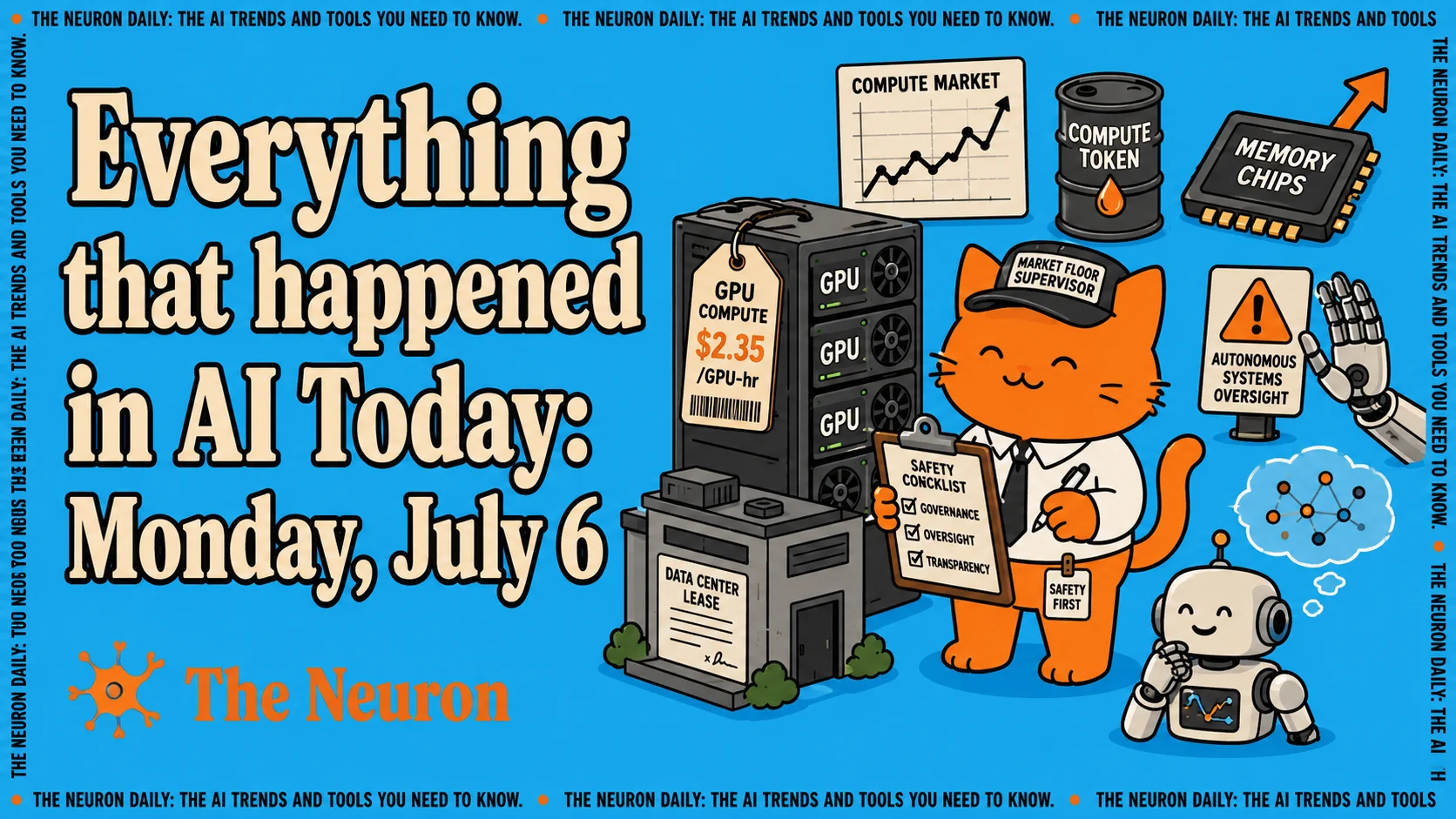
AI compute shifted from a cloud-service cost into a tradable financial asset after Ornn raised $33 million to create pricing and hedging infrastructure, while Treasury analysts warned that AI bubble risk could spread through data-center financing, cloud providers, chipmakers, utilities, and public markets. Anthropic locked in a $19 billion, 20-year data-center lease with TeraWulf, and memory-chip prices rose roughly 660% over the past year as SK Hynix launched a $28 billion U.S. share listing. Financial institutions and investment firms now face exposure to AI infrastructure as a distinct asset class, requiring new risk-assessment frameworks across banking and capital markets.
