
Taiwan’s Tech Hurdles Threaten Military Capability and Potential Coalition Defense
CSET Georgetown Jason Ly
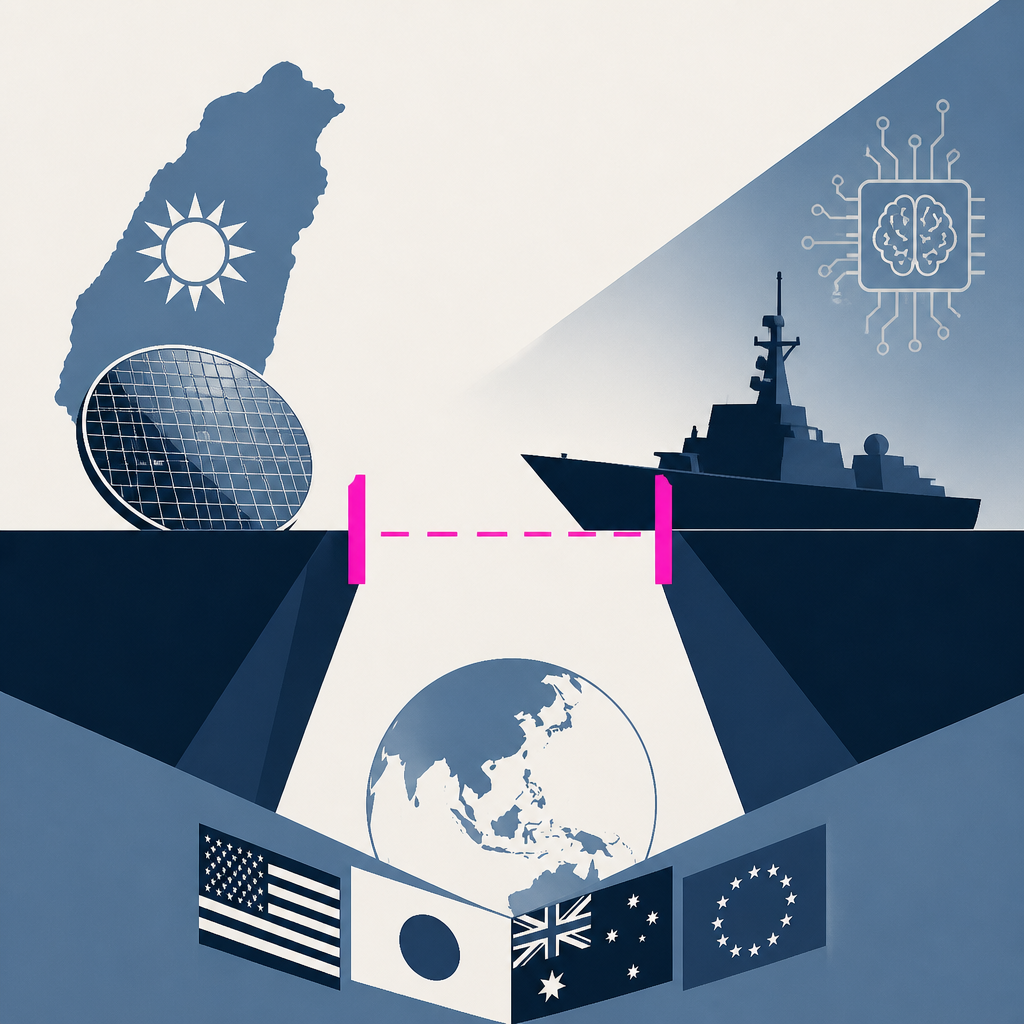
Taiwan makes the world's best chips but its own military is way behind on AI. That gap could weaken deterrence against China and make joint ops with allies harder.
Based on reporting by CSET Georgetown, Jason Ly — read the original for the full story.
Summary, retelling and take written by AI under human oversight; images are AI-generated illustrations. How we work · Report an error
There's a strange irony sitting at the heart of Taiwan's defense posture. The island that fabricates the chips powering most of the planet's AI boom can't seem to get AI working inside its own armed forces. Researchers Sam Bresnick and Fanny Chao laid out this contradiction in a recent op-ed for War on the Rocks, and the picture they paint is not flattering.
Taiwan's semiconductor sector, led by TSMC, sits at the absolute top of global chip manufacturing. Yet according to Bresnick and Chao, that industrial dominance hasn't translated into military capability. Taiwan's armed forces remain far behind where they need to be on adopting AI tools for things like surveillance, targeting, and battlefield coordination. The authors argue this isn't a minor bureaucratic hiccup — it's a structural problem that touches procurement, talent, doctrine, and interoperability with partners like the United States.
Why does this matter beyond Taipei? Because any future conflict scenario involving Taiwan almost certainly involves coalition operations. If Taiwan's systems can't talk to American or Japanese systems, or if its military lacks the AI-enabled situational awareness that modern warfare increasingly demands, joint defense becomes clumsier and slower exactly when speed matters most. Bresnick and Chao frame this as a readiness issue with strategic consequences — not just for Taiwan's own deterrence posture against Beijing, but for the credibility of any multinational response.
The piece doesn't pretend there's an easy fix. Building military AI capacity requires more than importing hardware; it demands institutional reform, sustained investment, and a workforce that understands both the technology and modern operational needs. Taiwan has the chips. What it apparently lacks is the connective tissue between semiconductor prowess and battlefield application — and closing that gap, the authors suggest, needs to become a priority now, not after a crisis forces the issue.
My take — AI-written commentary, not fact-checked reporting
This is the kind of gap that should embarrass everyone involved, because it's not a resource problem — Taiwan has the money and the chips — it's a coordination and urgency problem. I'd bet this pattern shows up in half the countries obsessed with AI hype at the consumer level while their defense ministries move at 1990s speed, and Taiwan just happens to be the case where the stakes are highest.
Read more about this at: CSET Georgetown
Related stories
 As China advances in AI, Trump faces a new test in the technology race
CSET Georgetown · 1 month ago ·
30
As China advances in AI, Trump faces a new test in the technology race
CSET Georgetown · 1 month ago ·
30
 Inside China's All-Out Push to Catch Up With American AI Chips
The Wall Street Journal · 1 month ago ·
35
Inside China's All-Out Push to Catch Up With American AI Chips
The Wall Street Journal · 1 month ago ·
35