Partnering with Bunkerhill Health: AI Agents that Improve Patient Outcomes
Sequoia sbarry ● Covered by 2 sources
Sequoia is doubling down on Bunkerhill Health, whose Carebricks platform lets hospitals build their own AI agents for clinical and admin work. One hospital went from one agent to over twenty — and ditched a pile of separate vendor tools in the process.
Based on reporting by Sequoia, sbarry — read the original for the full story.
Summary, retelling and take written by AI under human oversight; images are AI-generated illustrations. How we work · Report an error
Healthcare doesn't move fast, and everyone in the industry knows why: good research gets stuck in academic papers instead of reaching patients. Nish Khandwala learned this the hard way. As a Stanford grad student, he helped build an algorithm that could spot cardiovascular risk from a routine chest CT scan, good enough to get published in Nature Digital Medicine. Then his own father had a heart attack, and the CT scan showed the very signal that algorithm was designed to catch. The tool existed. It just wasn't anywhere near the bedside.
That gap is what Khandwala and co-founder David Eng set out to close with Bunkerhill Health, a company Sequoia backed at seed and is now doubling down on. Their first approach was almost artisanal: source data from a consortium of academic medical centers, validate a model, push it through FDA clearance, then physically install it in a hospital so a clinician could actually use it. It worked, but it revealed a second, bigger obstacle — hospitals simply don't have the bandwidth to keep deploying one-off AI tools one at a time.
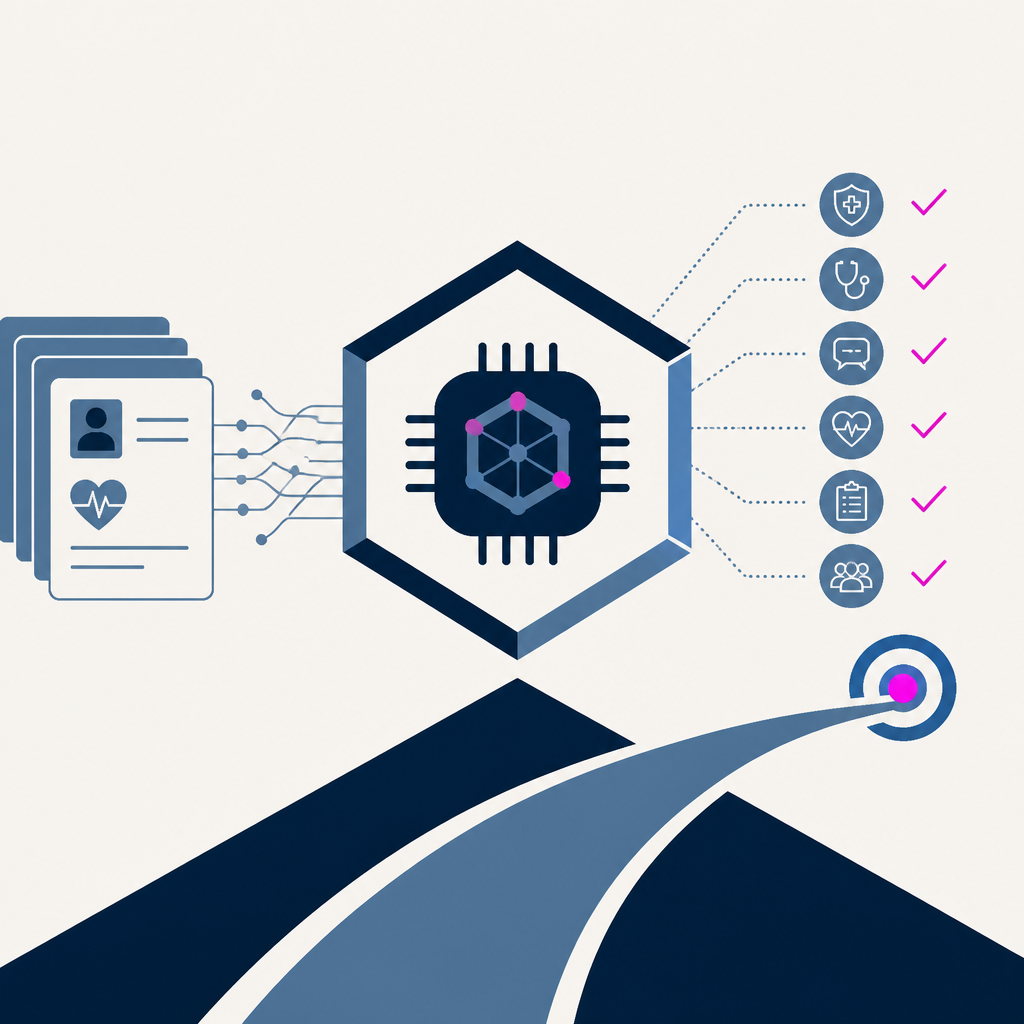
So Bunkerhill built Carebricks, a platform that lets any health system turn its own ideas into AI agents across clinical, operational, and administrative work, all from one place instead of stitching together separate vendor products. The health system brings the clinical judgment and the use case; Bunkerhill handles turning it into a working agent.
The clearest evidence of what this can do shows up at UTMB Health, where Bunkerhill went from a single agent in production to more than twenty, spreading specialty by specialty as clinicians saw the results. UTMB also used Carebricks to consolidate a scattering of point solutions from different vendors into one platform. The agents themselves work quietly in the background, flagging findings that matter and catching cases that might otherwise slip through — the goal being less time on manual, repetitive work and more time on actual patient care.
Sequoia's framing is that the bottleneck in healthcare AI was never the models, it was everything surrounding them: data access, regulatory approval, and the sheer friction of getting a working tool in front of a clinician. Bunkerhill's bet is that if you fix the plumbing once, at the platform level, hospitals can adopt ideas fast instead of watching them stall in pilot purgatory.
My take — AI-written commentary, not fact-checked reporting
The UTMB jump from one agent to twenty in a single health system is the number that actually matters here, not the funding headline. Healthcare AI has been drowning in point solutions and pilot programs that never scale, so a platform that lets a hospital consolidate vendors and multiply use cases on its own terms is a genuinely different bet than another narrow diagnostic tool. Whether Bunkerhill can keep that momentum across health systems with very different data, staff, and politics is the real test — plenty of platforms promise consolidation and deliver just one more vendor to manage.
Read more about this at: Sequoia