
NSA Lost Access to Powerful AI Model Amid Anthropic Dispute
The New York Times
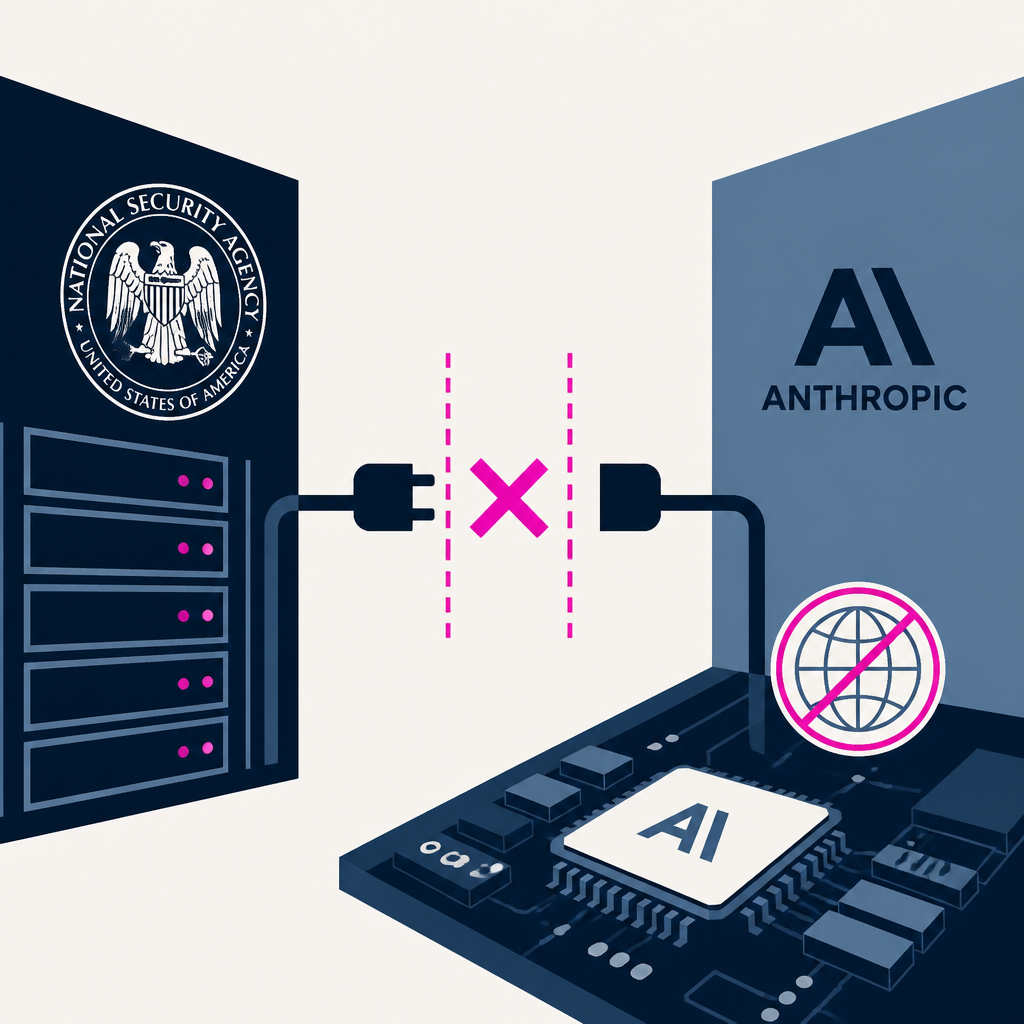
NSA cybersecurity analysts lost access to Anthropic's AI tools mid-testing after export controls hit the company. A classified contract to fix this is stuck, unfinished.
Based on reporting by The New York Times — read the original for the full story.
Summary, retelling and take written by AI under human oversight; images are AI-generated illustrations. How we work · Report an error
Somewhere inside the NSA, a team of cybersecurity analysts was in the middle of putting Anthropic's models through their paces when the access just stopped. Not because of a policy change at the agency, and not because Anthropic pulled the plug on a whim. Export controls landed on the company, and that was enough to sever a testing relationship that, by all accounts, was still in its early innings.
What makes this notable isn't the export controls themselves — those have been tightening around advanced AI for a while now, part of the broader effort to keep frontier capabilities out of adversaries' hands. It's who got caught in the blast radius. The NSA isn't some random enterprise customer kicking the tires on a chatbot. It's the agency that arguably has the most sophisticated appetite for AI-assisted threat analysis in the federal government, and it lost its runway mid-evaluation.
There's a fix in motion, at least on paper. Sources point to an effort to stand up a classified contract between Anthropic and the NSA, the kind of arrangement that would let the agency use these models in a controlled, cleared environment insulated from the export restrictions causing the problem in the first place. But
My take — AI-written commentary, not fact-checked reporting
This is the mess you get when export-control policy and national-security AI procurement aren't talking to each other. I'm generally pro-guardrail on frontier models leaving the country, but if the rules can accidentally lock out the NSA itself, the process needs a carve-out lane yesterday — not a contract still stuck in negotiation.
Read more about this at: The New York Times