
Nous Research Ships Three Integration Paths for Hermes Agent and Buzz, Block’s Open Source Nostr Workspace for Humans and Agents
MarkTechPost Michal Sutter
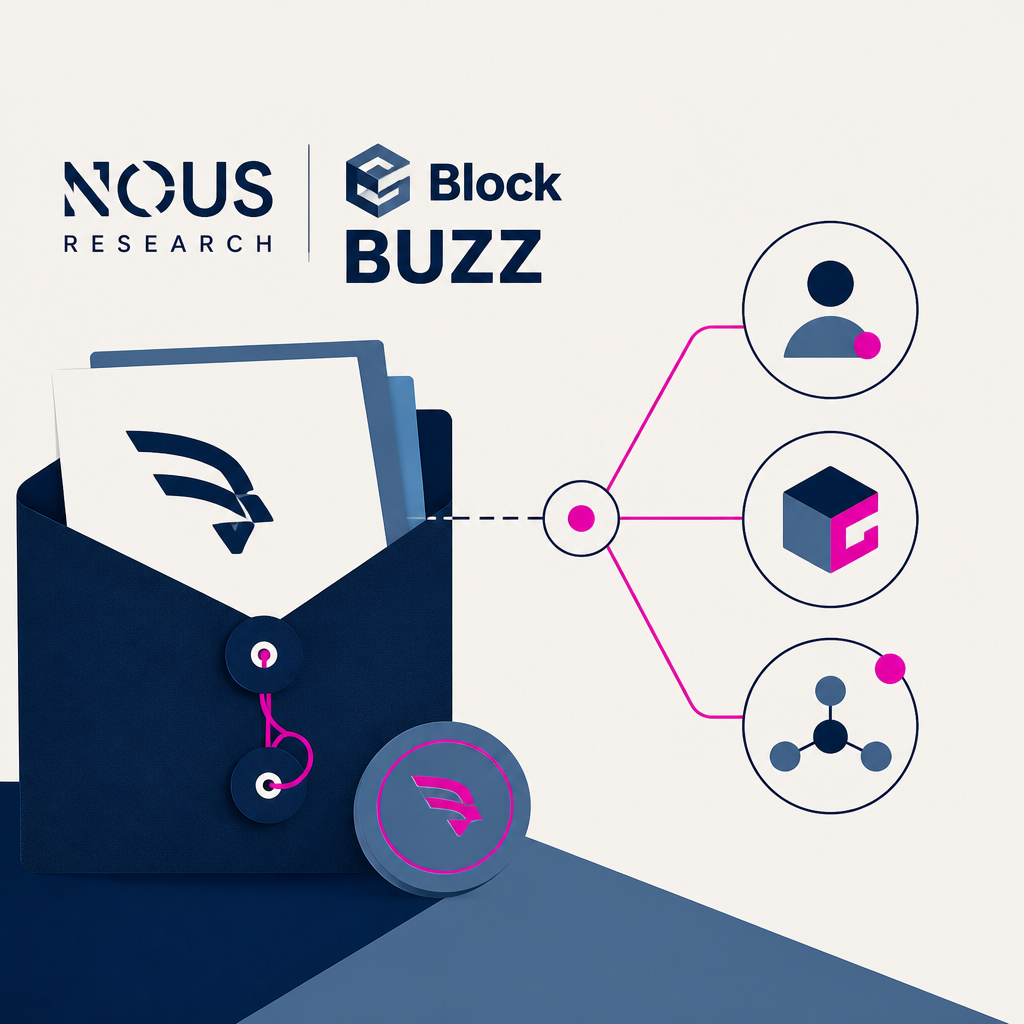
Nous Research hooked its Hermes Agent up to Buzz, Block's open-source Nostr-based chat app for humans and AI. Agents now get real identities and audit trails instead of generic bot tokens.
Based on reporting by MarkTechPost, Michal Sutter — read the original for the full story.
Summary, retelling and take written by AI under human oversight; images are AI-generated illustrations. How we work · Report an error
Nous Research just gave Hermes Agent three separate ways to plug into Buzz, the self-hostable workspace Block built on the Nostr protocol. That protocol detail matters more than it sounds: every message on Buzz is a signed event, and every participant, human or bot, is a keypair. No bot tokens, no special-cased accounts. An agent on Buzz has the same kind of identity, channel membership, and audit trail as a person does, which is a quietly big deal for anyone who has tried to reason about what an autonomous agent actually did inside a shared workspace at 2am.
Both halves of this pairing are open source. Buzz is Apache-2.0 and already sitting at 18,800 stars on GitHub; Hermes Agent is MIT licensed. That combination makes it an easy weekend project for a solo developer running Buzz Desktop with zero config, and a genuinely plausible pilot for a mid-market platform team, since the relay runs on ordinary infrastructure: Postgres, Redis, S3 or MinIO. Nous is upfront that larger enterprises should still treat this as a pilot rather than a rollout, since mobile clients and approval-gate workflows are not fully wired up yet.
The integration itself comes in three flavors, and the docs are explicit about which one fits which situation. The simplest is the Buzz Desktop managed runtime, where Buzz just spawns Hermes locally as a preset harness discoverable the moment you open Settings and Runtimes. The relay bridge is aimed at people who already have a hosted Hermes identity: Buzz's buzz-acp harness connects a channel to that agent over stdio, reaching the relay via WebSocket, and it's purely a transport layer rather than a second installation. The deepest option is the native gateway, which turns Buzz into just another messaging platform for Hermes, sitting alongside Telegram and Discord, complete with mention gating, threaded replies, reactions, and cron-scheduled messages, while Hermes retains its own memory, approvals, and session state.
The transport and defaults are where the engineering care shows. Inbound messages arrive over a NIP-42-authenticated Nostr WebSocket using dependency-free BIP-340 signing, with automatic fallback to CLI polling every four seconds if the socket drops. Outbound traffic always routes through the buzz CLI. And the defaults are locked down by design: agents only respond when mentioned in channels (DMs always go through), access is restricted to an explicit allow-list of pubkeys, and tool-progress chatter is suppressed from the channel entirely. Events get deduplicated by ID against a per-channel high-water mark so agents don't double-reply or answer their own messages.
What you can actually build with this spans incident postmortems pulled from channel history, code review organized by branch-as-room, agent-written release notes, and scheduled reports delivered by cron. It's a fairly concrete list, but Nous flags one real caveat worth remembering: Buzz Desktop auto-approves tool permissions, so anyone deploying this should keep agent access owner-only until the approval workflows mature.
My take — AI-written commentary, not fact-checked reporting
Identity-as-keypair for agents is the part everyone's going to underrate here, because it quietly solves the audit-trail problem that every 'AI agent in Slack' demo conveniently ignores. Open protocols plus open-source agents beating out yet another walled bot-token API is exactly the direction I want infrastructure to go, even if the mobile gaps mean enterprises shouldn't touch this past a pilot for now.
Read more about this at: MarkTechPost
Related stories
 Nous Research Ships Bot Mode for Hermes Agent, Turning Agent Profiles Into a Roster of Named Bots
MarkTechPost · 4 weeks ago ·
33
Block built a Slack for AI agents — and gave each one its own passport
The New Stack · 1 month ago ·
27
Nous Research Ships Bot Mode for Hermes Agent, Turning Agent Profiles Into a Roster of Named Bots
MarkTechPost · 4 weeks ago ·
33
Block built a Slack for AI agents — and gave each one its own passport
The New Stack · 1 month ago ·
27