
Meta Ray-Ban Display glasses get Muse Spark-powered AI features
Meta
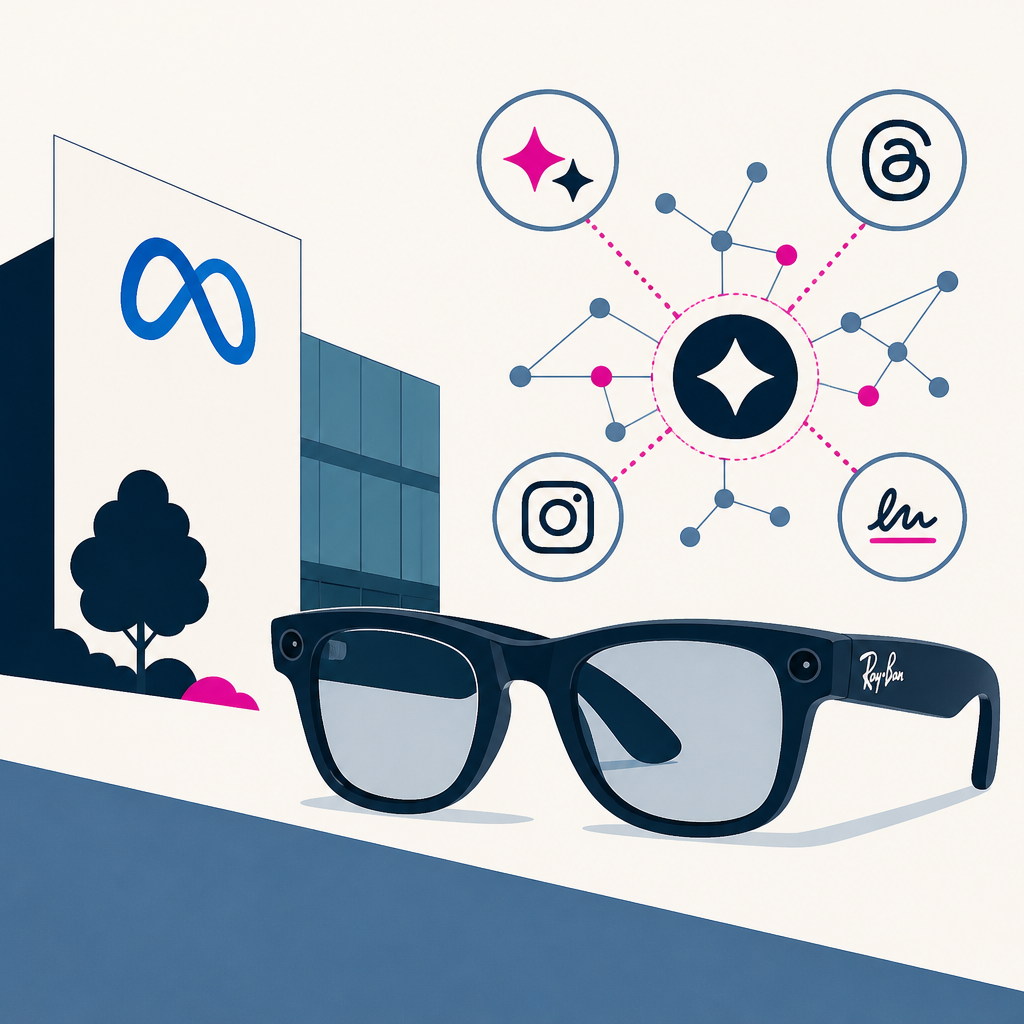
Meta just pushed new AI features to its Ray-Ban Display glasses via Early Access. Now you can browse Threads, get Instagram updates, and even handwrite prompts in the air.
Based on reporting by Meta — read the original for the full story.
Summary, retelling and take written by AI under human oversight; images are AI-generated illustrations. How we work · Report an error
Meta is quietly turning its Ray-Ban Display glasses into something closer to a wearable phone replacement, and the latest update is the clearest sign yet. Early Access users are now getting Muse Spark-powered Meta AI baked directly into the lenses, along with the ability to scroll Threads, catch Instagram notifications, and — maybe the oddest addition — write prompts to the AI with handwriting gestures picked up by the neural wristband.
That handwriting trick deserves a second look. Instead of talking out loud or tapping a tiny surface, users can essentially trace letters in the air, and the neural band translates the muscle signals into text. It's the kind of feature that sounds like a gimmick until you imagine sitting on a train and not wanting to speak commands to your glasses in front of strangers. Meta has been leaning hard on this neural interface since it debuted with the wristband last year, and this update pushes it from novelty into something with an actual daily-use case.
The social features are less flashy but arguably more telling. Pulling Threads and Instagram directly into the display means Meta wants these glasses to be a lightweight second screen, not just a camera and speaker combo strapped to your face. Given how much Meta has invested in Threads as a Twitter alternative, baking it into hardware that's still in limited release feels like an early flex — a way to make the app feel indispensable before it's even competed for glasses-market attention at scale.
All of this is still gated behind Early Access, so most people won't feel the update yet. But the direction is obvious: Meta is stacking its AI model, its social apps, and its hardware into one loop, betting that glasses — not phones — become the next place people check notifications and ask an assistant for help. Whether Muse Spark is good enough to make that assistant genuinely useful, rather than just present, is the part nobody outside Early Access can judge yet.
My take — AI-written commentary, not fact-checked reporting
I'll believe the neural handwriting input is more than a demo trick once it works reliably in a crowded coffee shop, not a controlled Meta video. What interests me more is the strategy: Meta is using limited hardware releases to lock its AI and social apps together before regulators or competitors can pick the combo apart, and that's a pattern worth watching closely as EU scrutiny of bundled AI features keeps growing.
Read more about this at: Meta