How Tolan builds voice-first AI with GPT-5.1
OpenAI
Tolan built an AI companion that talks with you in real time using GPT-5.1. It's less chatbot, more actual conversation partner that remembers you.
Based on reporting by OpenAI — read the original for the full story.
Summary, retelling and take written by AI under human oversight; images are AI-generated illustrations. How we work · Report an error
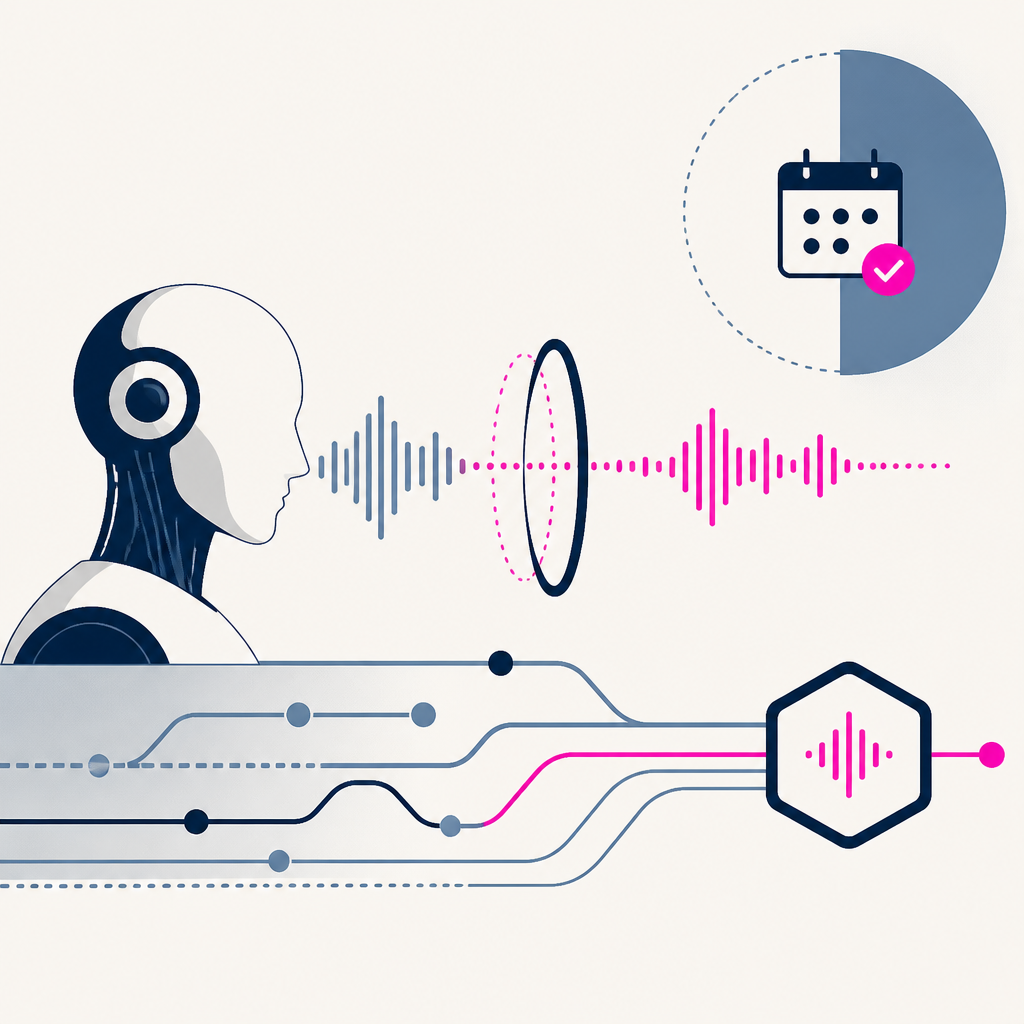
Voice assistants have long had a lag problem — that awkward beat where you can tell you're talking to a machine that's still catching up. Tolan's engineers decided that gap was the whole battle, and they built their companion app around closing it using GPT-5.1 as the backbone.
The approach leans hard on three things working together rather than any single flashy feature. Low-latency response generation keeps the back-and-forth feeling like an actual chat instead of a walkie-talkie exchange. Real-time context reconstruction means the model isn't just replying to your last sentence but rebuilding a working picture of the conversation as it unfolds, which matters a lot in voice because people ramble, backtrack, and change subjects mid-thought in ways text users rarely do.
The memory piece is where Tolan seems to be making its actual bet. Instead of treating memory as a lookup table of facts, the companion's personality shifts based on what it's learned about the person over time — GPT-5.1's memory handling gets used to shape tone and behavior, not just recall trivia. That's a harder problem than it sounds, because a companion that remembers everything but says it the same way every time still feels robotic.
None of this is groundbreaking research so much as careful systems engineering — stitching together speed, context, and memory into something that doesn't feel like three separate features bolted together. OpenAI is clearly using Tolan as a showcase for what GPT-5.1 can do outside chat windows, and the pitch is straightforward: voice-first AI stops being a gimmick once the latency and memory problems actually get solved, not just papered over.
My take — AI-written commentary, not fact-checked reporting
I'll believe
Read more about this at: OpenAI