
Faced with less compute and fewer tokens, Chinese AI labs are tightening the gap with the US by just being more efficient
Fortune Mia Osmonbekov ● Covered by 6 sources
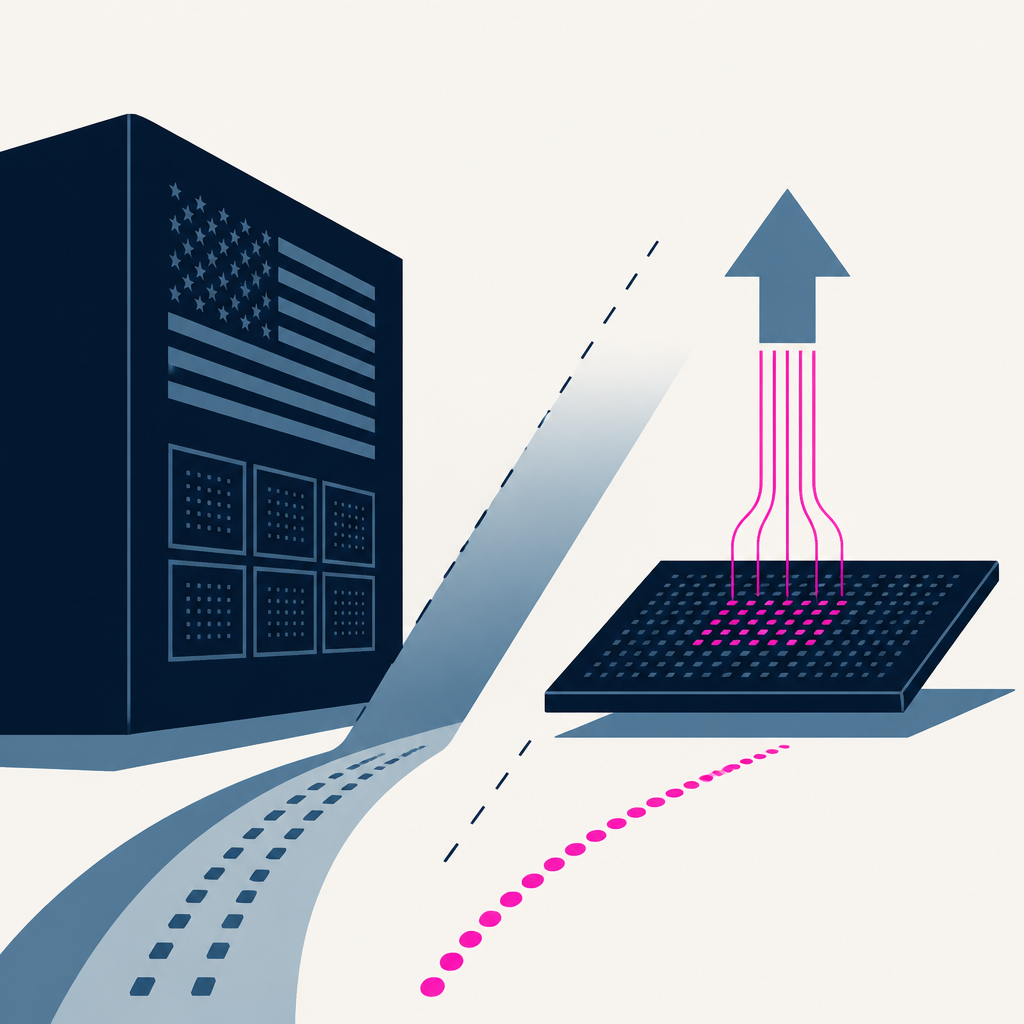
China’s AI labs are getting closer to U.S. rivals by using less compute and fewer tokens. That efficiency is helping them win business, even as the performance gap still isn’t closed.
Based on reporting by Fortune, Mia Osmonbekov — read the original for the full story.
Summary, retelling and take written by AI under human oversight; images are AI-generated illustrations. How we work · Report an error
The AI fight between the U.S. and China has taken another sharp turn. U.S. officials now say six Chinese companies, including DeepSeek and Moonshot, were buying bulk access to American rivals and using the outputs to train their own systems. The FBI, NSA and CISA said Tuesday that the companies extracted “capabilities worth billions” this way since 2024. China’s foreign ministry dismissed the accusations as “groundless” and said its AI progress comes from scientific self-reliance.
But the accusations only explain part of why Chinese models have caught up so fast. Analysts point to something less dramatic and probably more important: Chinese labs learned how to do more with less. The key is attention, the expensive mechanism inside every large language model that lets it weigh tokens against each other and understand context. Brendan Burke, a semiconductor and supply chain analyst at Futurum Group, said Chinese labs found algorithms that cut the cost of those calculations by an order of magnitude and often get better results because they summarize the most relevant tokens instead of hauling everything into view.
That matters because China has been forced to live with tighter hardware limits. U.S. export restrictions have cut off access to Nvidia’s best chips, pushing Chinese labs toward domestic alternatives such as Huawei. The U.S., meanwhile, still controls 74% of the world’s compute, according to a White House report, and American hyperscalers are spending billions on more data centers. Burke’s point was blunt: when you can’t just throw more compute at the problem, you get inventive. U.S. frontier labs, by contrast, can afford to be “token hogs” because their systems are designed to explore more widely.
The cost gap is showing up in real work. Ameya Kanitkar, cofounder of the AI measurement platform Larridin, said Chinese models such as GLM 5.2 and Kimi 2.6 and 2.7 can handle about 75% of engineering tasks reasonably well at a fifth of the cost of U.S. models in the workflows his firm tracks. He still gives the American frontier systems the edge on the hardest jobs. But for ordinary enterprise coding and engineering work, that may be enough.
And that’s why Chinese models are starting to show up inside U.S. companies instead of just on a benchmark chart. DeepSeek’s R1 was made available through Hugging Face, making it easier for firms to download, fine-tune, and run it through cloud providers like Amazon Web Services. Hugging Face said Chinese open-source models made up 41% of downloads last year, more than U.S. ones. DoorDash’s Andy Fang called Moonshot’s Kimi cheaper and better quality. Airbnb, Siemens, Thomson Reuters and Cursor have all found uses for Chinese models too. The gap with the U.S. is still there. It’s just getting pricier to defend.
My take — AI-written commentary, not fact-checked reporting
The annoying truth is that open models keep doing the thing closed-model boosters swore wouldn’t happen: they spread because they’re useful, not because they’re fashionable. U.S. labs can keep charging for the premium tier, but if Chinese models are cheaper, good enough, and easier to move around, the market will do the usual merciless spreadsheet thing.
Read more about this at: Fortune
Related stories
 Chinese AI models narrow cyber gap with US rivals
CSET Georgetown · 1 month ago ·
10
The U.S. wants to contain China’s AI. Silicon Valley keeps using it
Rest of World · 1 month ago ·
41
OpenAI and Anthropic warn Washington about Chinese distillation of U.S. AI models
New York Post · 2 months ago ·
17
Chinese AI models narrow cyber gap with US rivals
CSET Georgetown · 1 month ago ·
10
The U.S. wants to contain China’s AI. Silicon Valley keeps using it
Rest of World · 1 month ago ·
41
OpenAI and Anthropic warn Washington about Chinese distillation of U.S. AI models
New York Post · 2 months ago ·
17