China’s Low-Priced Z.ai Model Is Exposing Costly Coder Habits
IEEE Spectrum AI Matthew S. Smith ● Covered by 7 sources

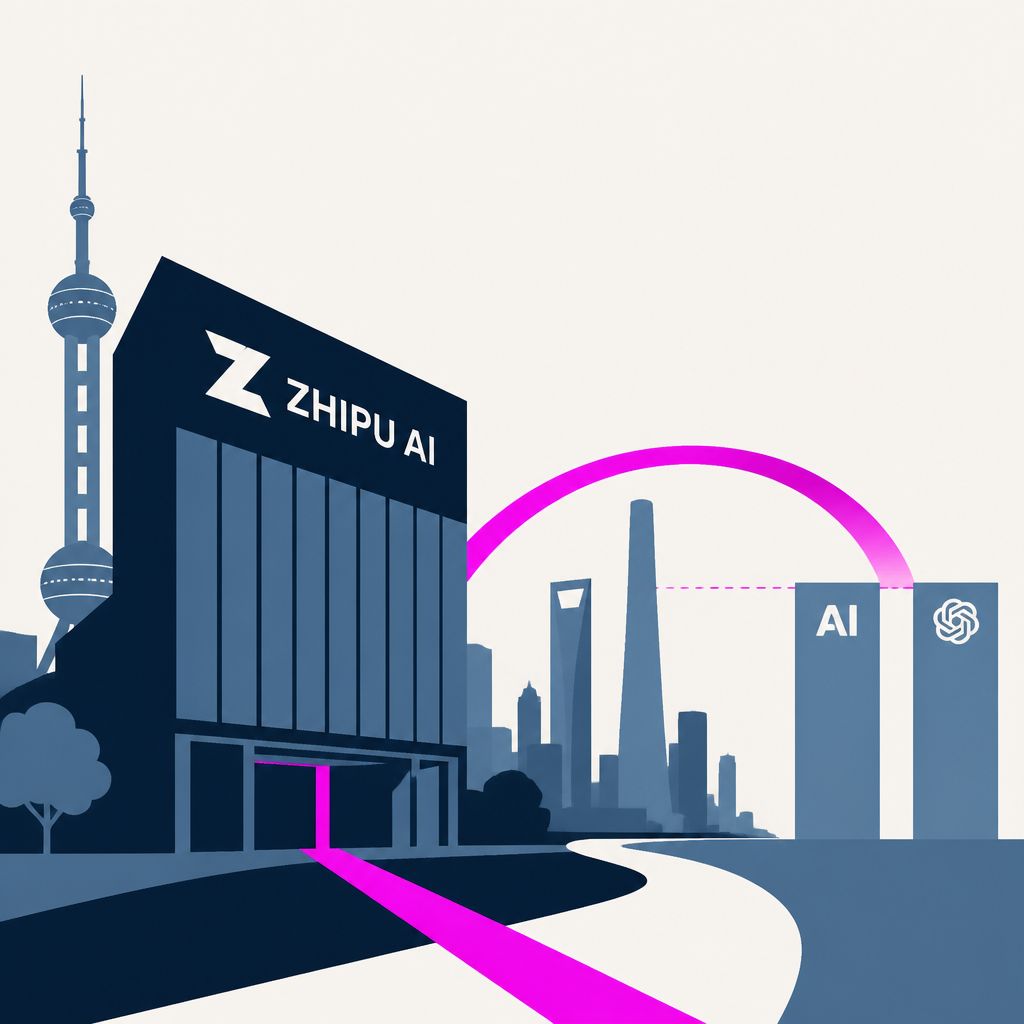
Z.ai released GLM 5.2, a Chinese open-weights AI coding model priced at $4.40 per million output tokens, roughly one-fifth the cost of Anthropic's Opus 4.8. The model performs comparably to frontier models on some benchmarks and can maintain coherent reasoning over extended interactions, though it lags on harder coding tasks like long-duration project work. Software engineers now have a cost-conscious alternative that may force U.S. companies to become more intentional about which models they use rather than defaulting to the most powerful option.
Why it matters
Zain Hasan, an AI engineer at Together AI, has taught himself to use AI coding assistants while still keeping an eye on cost. He directs difficult problems to a frontier model, meaning one near the current state of the art in reasoning and capability, such as Anthropic’s Fable. But if the task that Hasan is outsourcing is more straightforward, he directs it to a less capable—and less expensive—language model. Right now, the cheaper model, for him, tends to be GLM 5.2. Released on 16 June by the Beijing-based lab Z.ai, GLM 5.2 is an open-weights model, meaning any organization with sufficient hardware can download and host the model for free.Those that pay Z.ai for GLM access still can save money, because the company’s API costs $4.40 per million output tokens. That’s less than a fifth of the comparable price for access to Anthropic’s Opus 4.8 model, and a tenth the price of Anthropic’s Fable coding model. An output token is the basic unit of text a model generates in response to a prom
Also covered by
- TLDR — Who's Afraid of Chinese Models?
- The New Stack — Claude Fable 5 vs. Kimi K3: Same results, one-third the cost, 4x slower
- TLDR Dev — The Kimi K3 Moment
- Exponential View — 🔮 Kimi K3 surprise & AI economics; the solar paradox; AI's right to learn, cancer vaccine & junior jobs++
- MarkTechPost — Kimi K3 vs DeepSeek V4 Pro vs GLM-5.2: Open Trillion-Scale MoE Models Compared on Benchmarks, License, and Serving Cost
- Simon Willison — Kimi K3, and what we can still learn from the pelican benchmark